
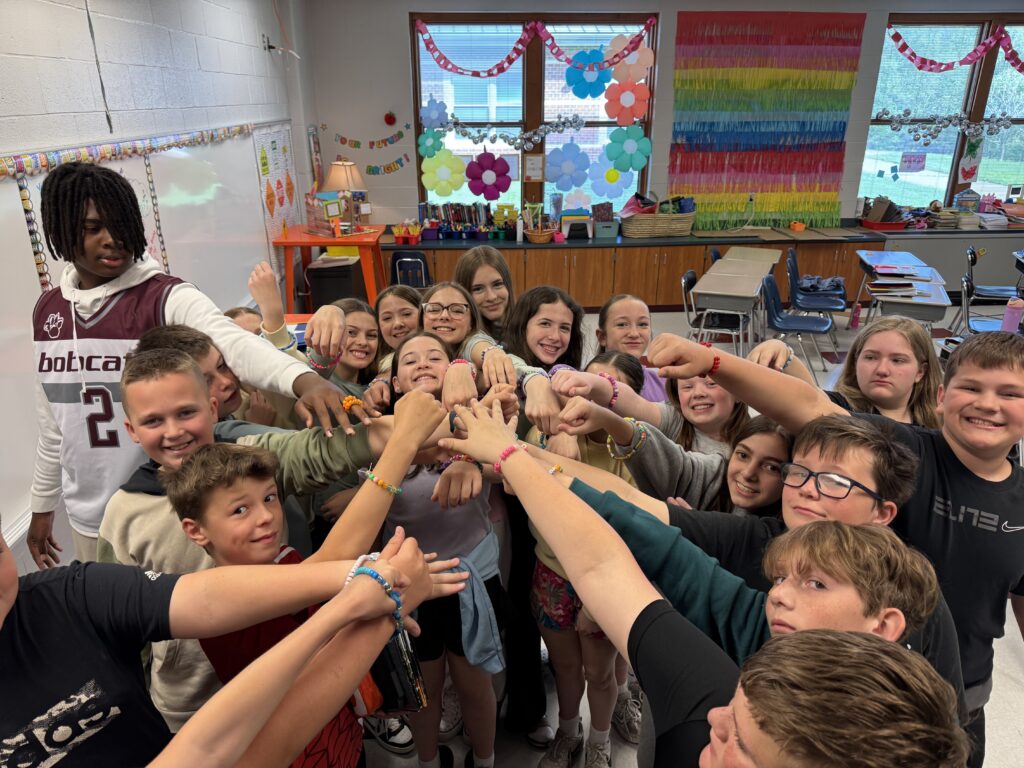
When people think about English Language Arts, Tara O’Leary knows they’re likely to think about reading, writing, and grammar. Tara thinks about connections: students connecting to a text, to their teacher, to one another, and to the world around them.
For Tara, a sixth-grade ELA and makerspace teacher in Beaver Area School District, those connections begin with trust. Twice a week, her students gather for “campfires,” forming a literal circle where Tara shares pieces of her own life and students get to know one another. That foundation becomes especially important when students are asked to do something difficult or vulnerable.
“When you’re trying to put your words and thoughts on paper, that’s very vulnerable,” Tara says. “When the kids trust me, they feel like they can put their thoughts and ideas on paper.”
That willingness to take risks has been reinforced by Tara’s experience with Agency by Design Pittsburgh. She knew little about the program when she signed up, but quickly found value in stepping outside her classroom and connecting with other educators. “Teaching is lonely,” she says. “You know your 90 students well, but it’s hard to get outside your box.” Monthly Agency By Design gatherings broadened her perspective and sent her back to her own students energized and ready to experiment.
Sometimes, those experiments begin with Tara herself. In one Agency by Design session, educators read a challenging text and were then handed glue, paper, and musical instruments and asked to demonstrate their understanding through the arts. Being “comfortably uncomfortable” helped Tara understand what she was asking of students when she brought the experience back to her classroom the next day.
The results surprised her. Students created frozen tableaus, physical objects, and even a dance to interpret what they had learned. “It’s helped me think outside the box and find new ways for kids to demonstrate their learning,” Tara says.
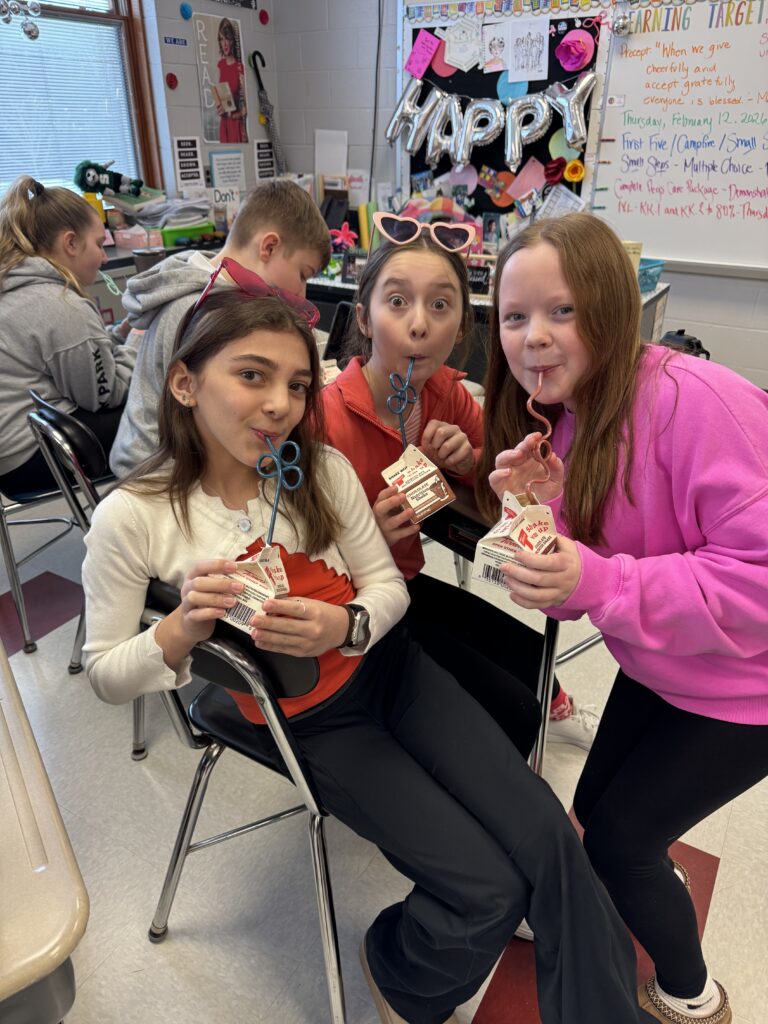
Her Agency by Design mini-grant gave her another opportunity to put that philosophy into practice. Tara used part of the funding to deepen students’ experience reading Small Steps, a memoir about a 12-year-old girl who contracted polio. A milkshake plays a pivotal role in the story, so Tara bought milkshakes for every student, transforming a moment from the book into a shared classroom experience.
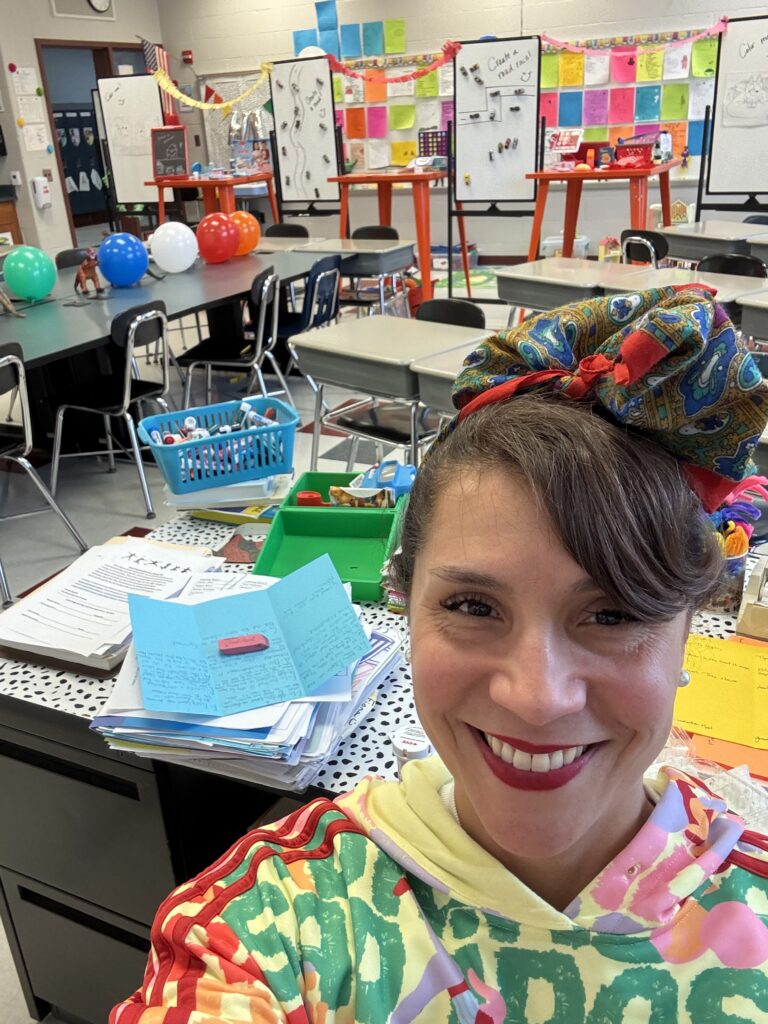
With the remaining funds, Tara purchased cardboard, construction paper, hot glue, googly eyes, and other materials and challenged each student to create a museum about themselves. Students reflected on their school experiences, important people in their lives, and who they hoped to become, then transformed those ideas into spaces ranging from hockey rinks and boats to models of their own classroom.
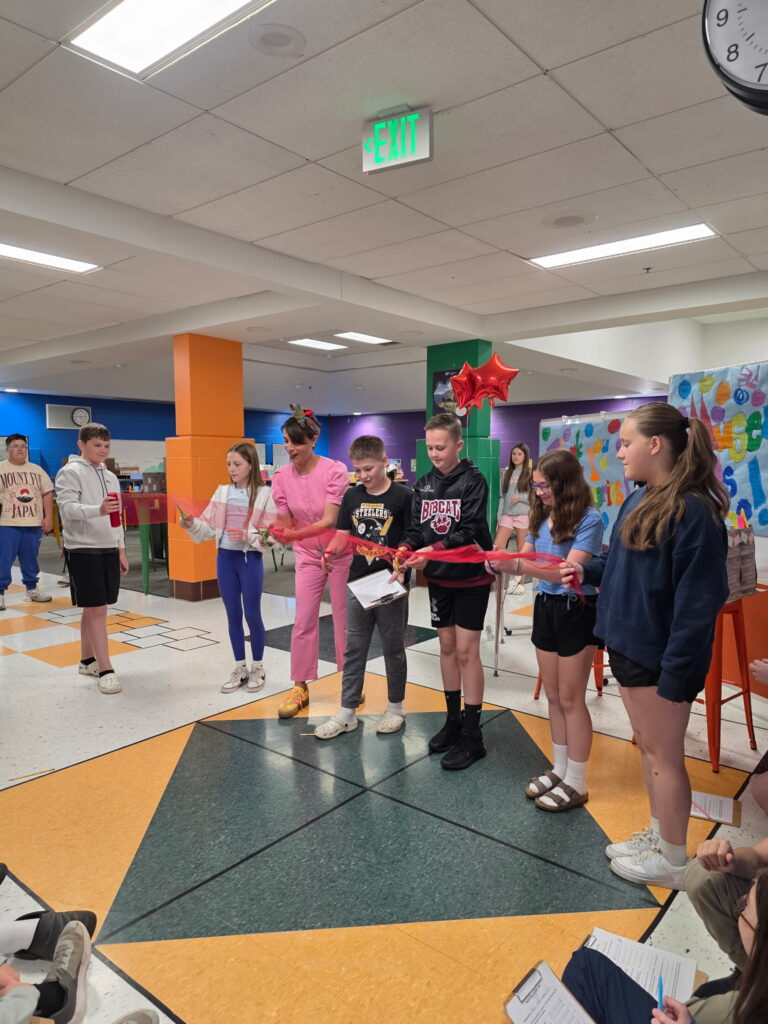
Together, the 150 individual museums became a schoolwide exhibition, complete with a ribbon cutting. Younger students toured the displays while sixth graders explained what mattered to them and why. “Seeing their experience made visible was priceless,” says Tara.
Tara is convinced that students should help shape what happens in their classroom. The moments they remember won’t be multiple-choice tests. They’ll be moments when they were trusted to create, contribute, and make meaning for themselves.
“I can’t ever go back to telling my students ‘now do this,’” Tara says. “Now we get to do this together.”


Download Tara's poster
