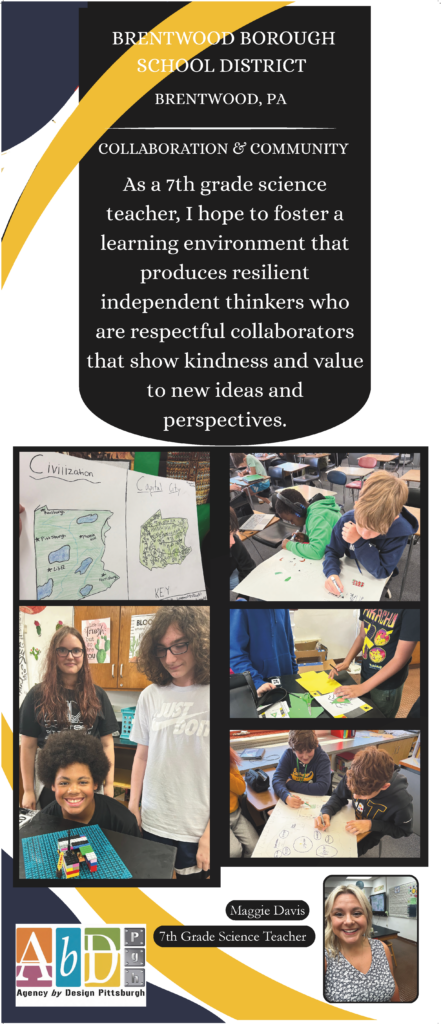
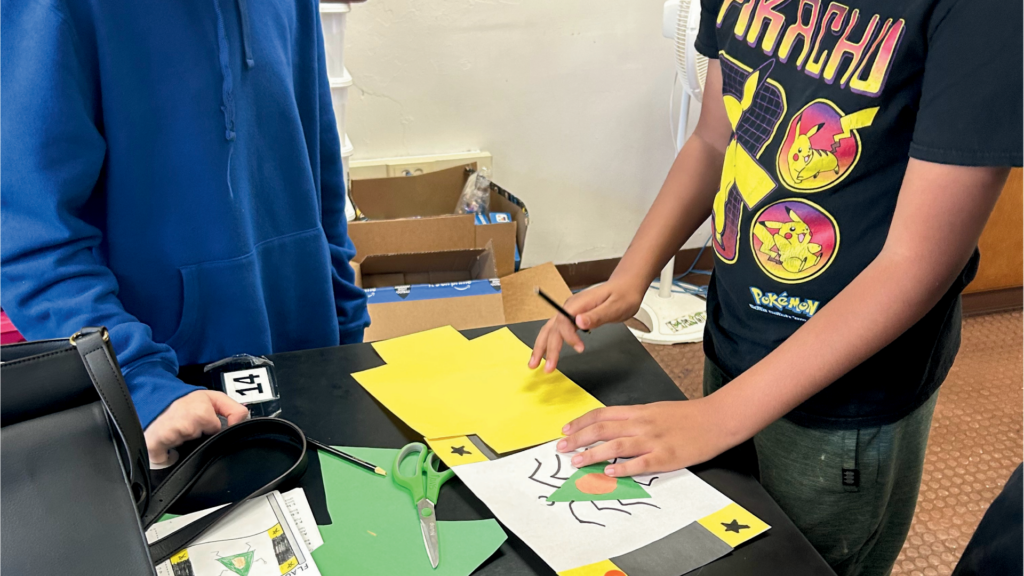
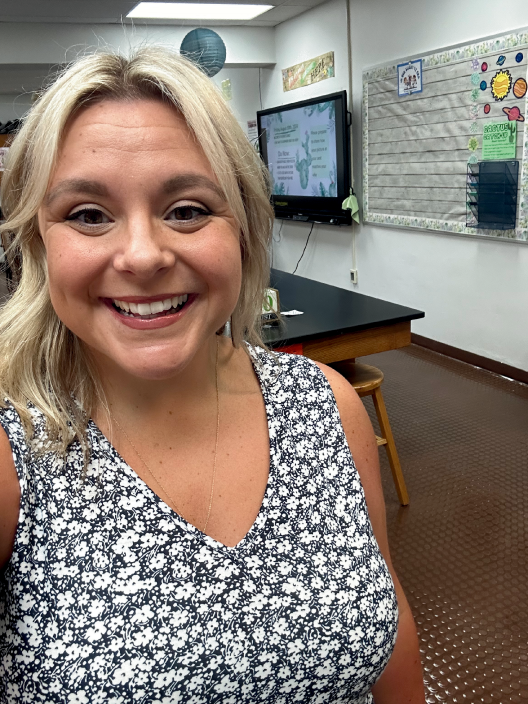
For Maggie Davis, a seventh-grade science teacher at Brentwood Borough School District, a successful classroom can be a little chaotic. Students might be building, experimenting, talking, or making a mess. What matters is that everyone has a way into the learning.
“Collaboration and community are my top priorities,” Maggie says. She wants students to feel safe taking risks and working through problems, even if science isn’t their strongest subject. “If they’re trying to be better people and they’re learning skills like problem solving and persevering through struggles and sometimes thinking outside of the box to get a solution to a problem, that’s what I hope they take out of my room.”
When Maggie went looking for a better approach for a special class she was teaching called Science and Design, a curriculum director introduced her to Agency by Design Pittsburgh. Maggie quickly saw possibilities for making the class more hands-on, creative, and responsive to students.
Nearly five years later, Maggie calls Agency by Design her favorite professional learning community. Instead of simply hearing about teaching strategies, she gets to see other educators’ classrooms, exchange ideas, workshop projects, and adapt what she discovers to her own students. Those experiences have influenced everything from individual lessons to Brentwood Middle School’s annual STEM Extravaganza, a schoolwide celebration where students tackle design challenges and share projects with their families.
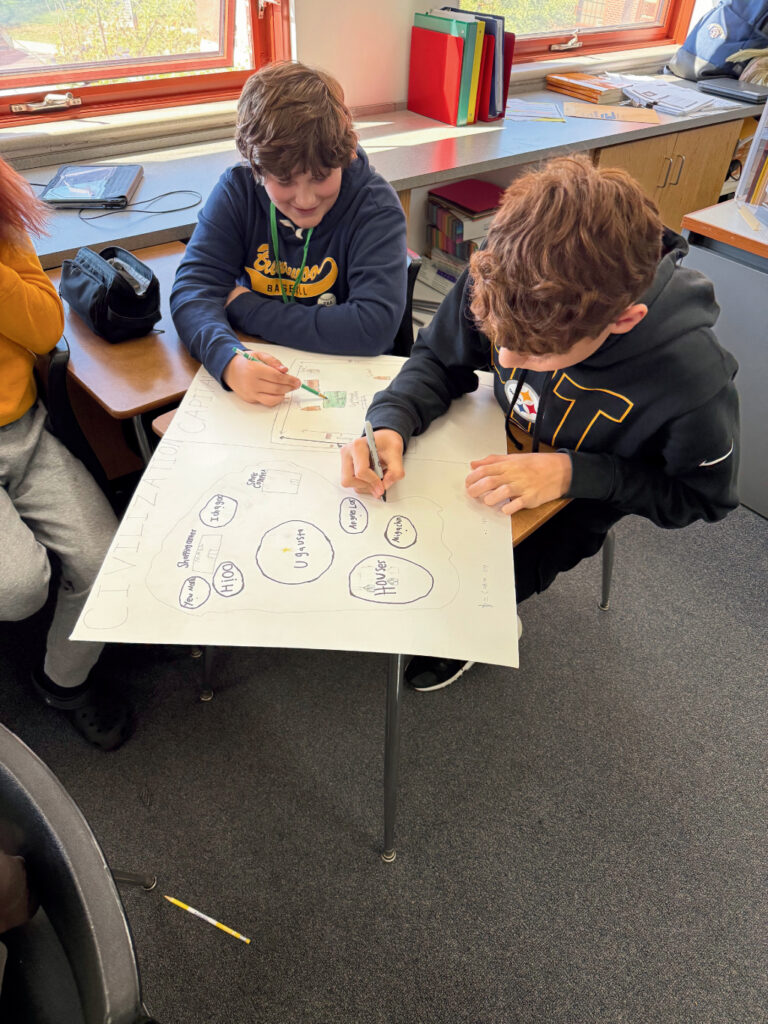
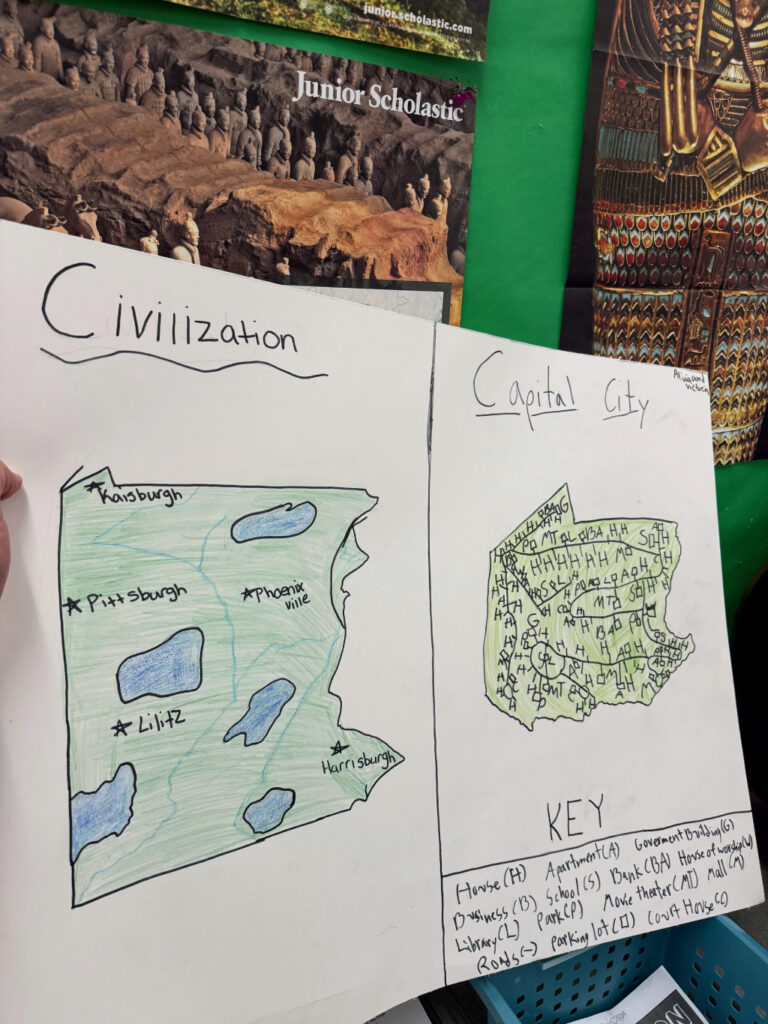
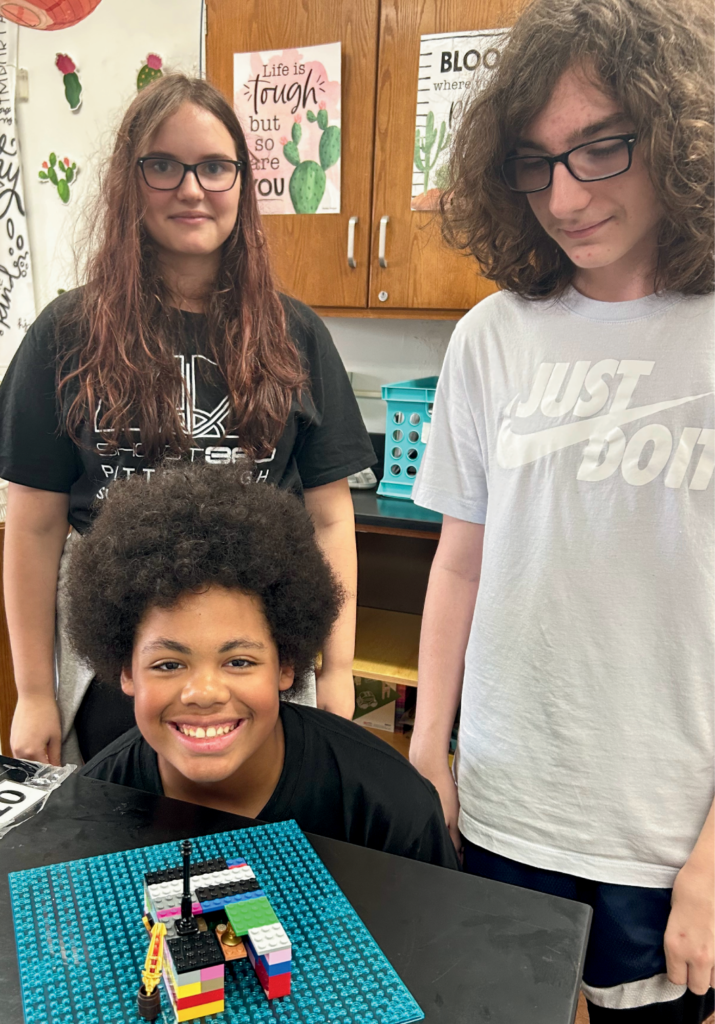
That spirit of experimentation also shaped Maggie’s first Agency by Design mini-grant project. Looking for a way to immerse students in multidisciplinary learning, she teamed up with a social studies teacher to task students with creating civilizations of their own. Students drew on what they had learned about ancient civilizations to invent governments and currencies, design flags and maps, and build physical models from LEGO bricks and other materials purchased with the grant.
The project culminated in the school library, where students explored one another’s civilizations and presented their work to classmates, teachers, and even the school principal. Some were initially nervous about speaking in public, but quickly gained confidence.
“Once they realized it was things that they wanted to talk about and things that they made on their own,” Maggie says, “they were very willing to share.”
That ownership has become increasingly important in Maggie’s practice. Her seventh graders now complete passion projects about something they are genuinely interested in. Students research their chosen subject and create prototypes representing what they’ve learned. According to Maggie, students who struggle in traditional science lessons often blossom while working on their passion project.
For Maggie, Agency by Design has helped make handing that freedom to students feel less risky. Seeing other educators put ideas into practice has shown her that she can borrow, adapt, experiment, and sometimes simply turn the reins over to students.
“It doesn’t have to be this scary thing,” Maggie says. When educators can see student-centered learning in real classrooms, new possibilities begin to feel achievable on their own.
Download Maggie's poster